
Double Alternation Spatial Maze
Description
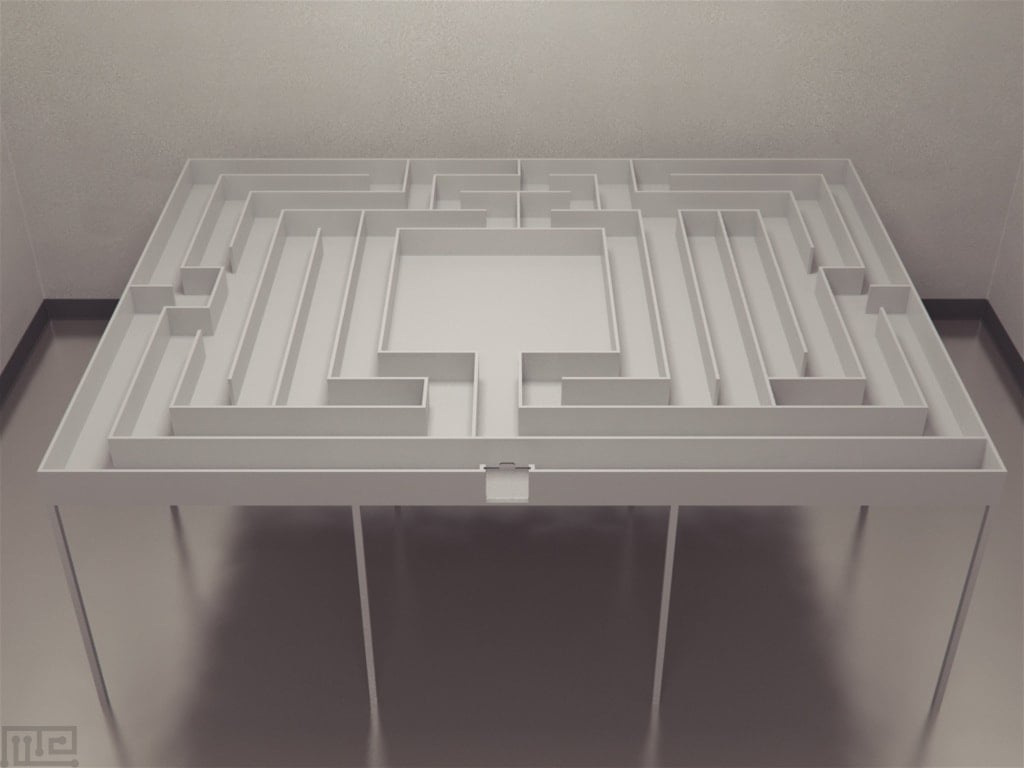
The maze was of the elevated type. Each unit was 35.5 inches long. Of this distance, 10 inches were cul-de-sac and 24 inches were true pathway. In the experiments to be described in this classic paper by Walter S Hunter (1929), Dr. Hunter described the sensory control of behavior in the maze by controlling the stimuli presented to the animal. All of the mazes were constructed so that the distances between turns were exactly equal and consequently would yield equal proprioceptive stimuli. All turns were right angle turns. As a result, all proprioceptive stimuli from right turns should be alike and all stimuli resulting from left turns should be alike. Furthermore, the pathways were carefully machined in order to eliminate cutaneous differences The rats were carried one at a time from the living room to the experimental room. One trial daily was given. No food was placed on the maze. When the rat reached the end of the maze, he was lifted to a chair six feet away where he ate his ration of bread.
Track rodents with ConductVision
ConductVision is our video-tracking software. Record your sessions on video, and it scores standard rodent tests, such as those listed below.
Examples of tests it scores
To check whether ConductVision scores your protocol in this apparatus, ask in your quote request.
Add ConductVision to your quote
A 5-year license is $3,990 in total.
Results export as CSV files.
Walter S. Hunter (1929) The Sensory Control of the Maze Habit in the
White Rat, The Pedagogical Seminary and Journal of Genetic Psychology, 36:4, 505-537, DOI: 10.1080/08856559.1929.10532211