Maze Basics
How to Calibrate and Measure Electrical Current
June 16, 2023
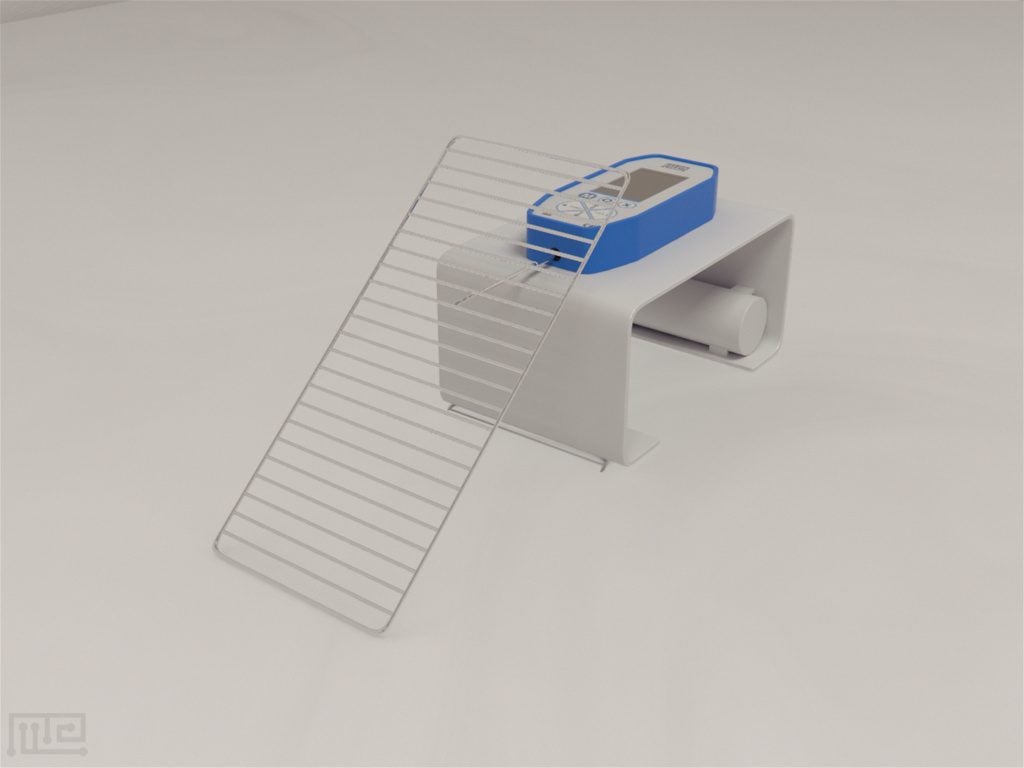
For many of the automated products Maze Engineers offers, shock delivery is required. Shocks are applied using shock grids. To measure the shock current, you…
Guidelines to Rodent Enclosures and Cages
April 6, 2023
The guidelines for biomedical research involving rodents in the USA are set by the National Institutes of Health (NIH) and the Office of Laboratory Animal…
Grip Strength Tests in Rodents
January 9, 2023
The grip strength test is performed by using the grip strength apparatus. It measures the motor functions of rodents when they grasp a specially designed pull bar assembly with a peak amount of force. The peak force applied is displayed on a digital display with precision force gauges. You can either manually record values or use the included software to do so automatically.
Maze Basics: Sleep Fragmentation Chambers
May 13, 2022
Sleep is essential for our body and mind to recharge, keeping the body healthy and alleviating diseases. Having a good night's sleep increases our energy and…
Looking to dive deeper into the mazes behind behavioral research? Browse through our easy-to-read introductory articles on the various mazes used for research. You’ll learn the basics behind the featured maze apparatus, what it tests, and the measurements it’s designed to acquire.
You may also want to check out these related Maze Engineers content collections for more:
- Strain Library: Browse through all the various mouse strains used in research and learn what is known about their genetics and how they are used in pharmaceutical studies.
- Mouse Ethogram: A comprehensive resource that lists detailed information profiling all known mouse behaviors, including information on pharmaceutical studies, disease models, and different mouse strains that display this behavior.
- Nutrition and Drugs: Browse through our growing catalog of nutrition and drugs where we explore the relationship between them and behavior. We also cover how different mazes are used to assess behavioral changes that occur as a result of nutrition or drug treatment.
Maze Basics: T Maze
June 4, 2018
Welcome to Maze Engineers: Maze Basics. Today we’ll talk about the T maze. A Trial Run on the T Maze
Do-It-Yourself: How to Build a Rat Maze
May 29, 2018
Using Mazes to Understand Behavior Mazes have been used for decades as a way to study rodent behavior, particularly learning and memory, navigation, and…
Tail Suspension Test
February 21, 2018
Depression is one of the most studied psychological disorders and a lot of the behavioral work has been done in mice and rats. Before we explore a behavioral…
Maze Basics: Balance Beam Laboratory Apparatus
January 5, 2018
Welcome back to Maze Basics! Today, we’re going to talk about the balance beam test. In gymnastics, the balance beam was an elevated beam that you carefully…
Maze Basics: Hole Board Apparatus
November 14, 2017
Welcome to Maze Basics! Today, we’re going to talk about the hole board apparatus. The hole board test is interesting because it’s so versatile. We’ll talk…
Maze Basics: Conditioned Place Preference
October 5, 2017
The conditioned place preference chamber is a paradigm widely used to explore the effects of natural and pharmacological stimuli, taking advantage of learned…
Open Field Test: A Measure of Anxiety
August 21, 2017
Hi everyone! Welcome back to another installment of Maze Basics. Today, we’re going to talk about the Open Field test. The apparatus for the open field test is…
Learned Helplessness
August 13, 2017
Learned Helplessness And Depression Depression is an important disorder to study, especially in today’s society. It is chronic, life-threatening, and affects…
The Elevated Plus Maze: How it Works
May 29, 2017
Anxiety disorders are the most common mental illness in the United States, as it affects around 18% of the population. Not only is it prevalent, but it’s also…
Maze Basic: Fear Conditioning
May 22, 2017
In the late 1890’s, Ivan Pavlov conducted his famous experiment, now known as Pavlov’s dogs. The idea behind the experiment was that his dogs salivated…
Elevated Plus Maze: Understanding the Basics
April 12, 2017
The Elevated Plus Maze is a widely used assay for anxious behavior in rodents. The assay leverages rodent’s natural behaviors to provide a useful experimental…
Hebb-Williams Maze
May 9, 2016
Content The Basics Specifications of the Arena How it works Acclimation Aquisition (A-F) Testing (12 sets) A Multi Use Test How Does The Scoring Works What You…