
The Colosseum Maze:
An Ethologically Relevant Behavioral Task for Assessing Spatial Cognition in Mus musculus
Mouse models are widely utilized in biomedical research to investigate the mechanisms underlying neurological and psychiatric disorders. The accurate assessment of cognitive function in these rodent models is critical and traditionally relies on specialized behavioral tasks designed to probe facets of attention, decision-making, learning, and memory.
However, many commonly cited behavioral assays were initially developed to assess spatial learning and memory in rats, whose natural behaviors (e.g., swimming) are not ethologically relevant to mice.
Given the distinct differences in natural mouse and rat behavior, a clear need exists for the development of tasks tailored to the innate ethology of Mus musculus.
Novel Design and Validation
The Murphy lab at the University of Michigan invited The Colosseum Maze, a novel apparatus specifically designed to evaluate spatial learning and memory in mice. This maze capitalizes on the instinctive tendency of mice to seek elevated shelter. Critically, testing is conducted without external aversive or appetitive motivation (e.g., bright overhead lighting, aversive noise, or food/water deprivation). This design choice mitigates potential confounding variables introduced by stress, promoting a more accurate assessment of intrinsic cognitive capacity.
Validation Studies:
The apparatus was validated across cohorts of both male and female mice, spanning common research strains:
- C57BL/6NTac
- C57BL/6NTac x C3H "Sighted" F1 hybrid
- 129SvEv
- An established mouse model of Alzheimer's disease (Jax: MMRRC Strain #034848-JAX)
The Colosseum Maze offers researchers a validated, stress-minimized, and ethologically appropriate platform for the rigorous study of spatial learning and memory in mouse models.
Vertical Maze
Learn More
Questions?
Request a Quote
Price & Dimensions
Mouse
$4,990
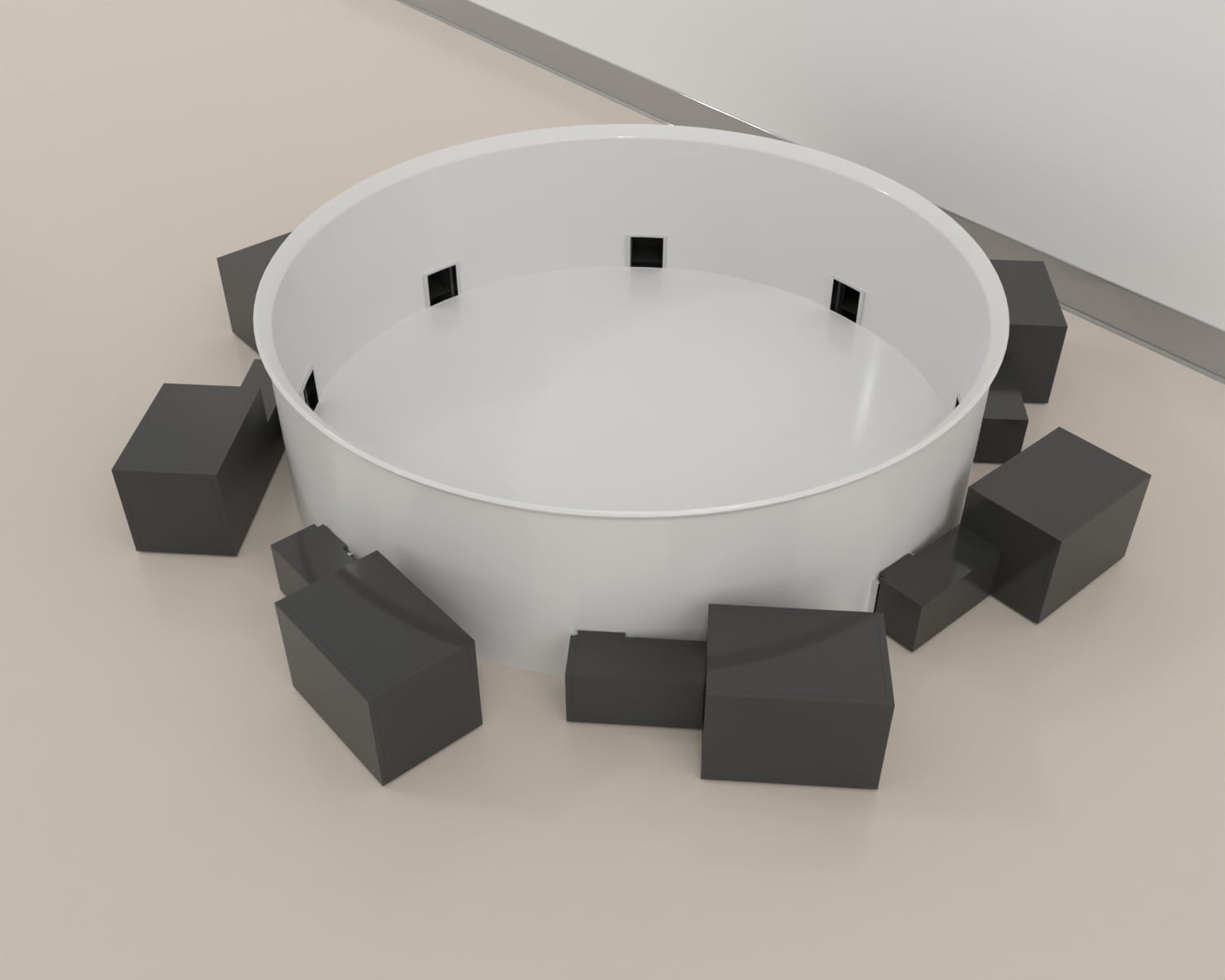
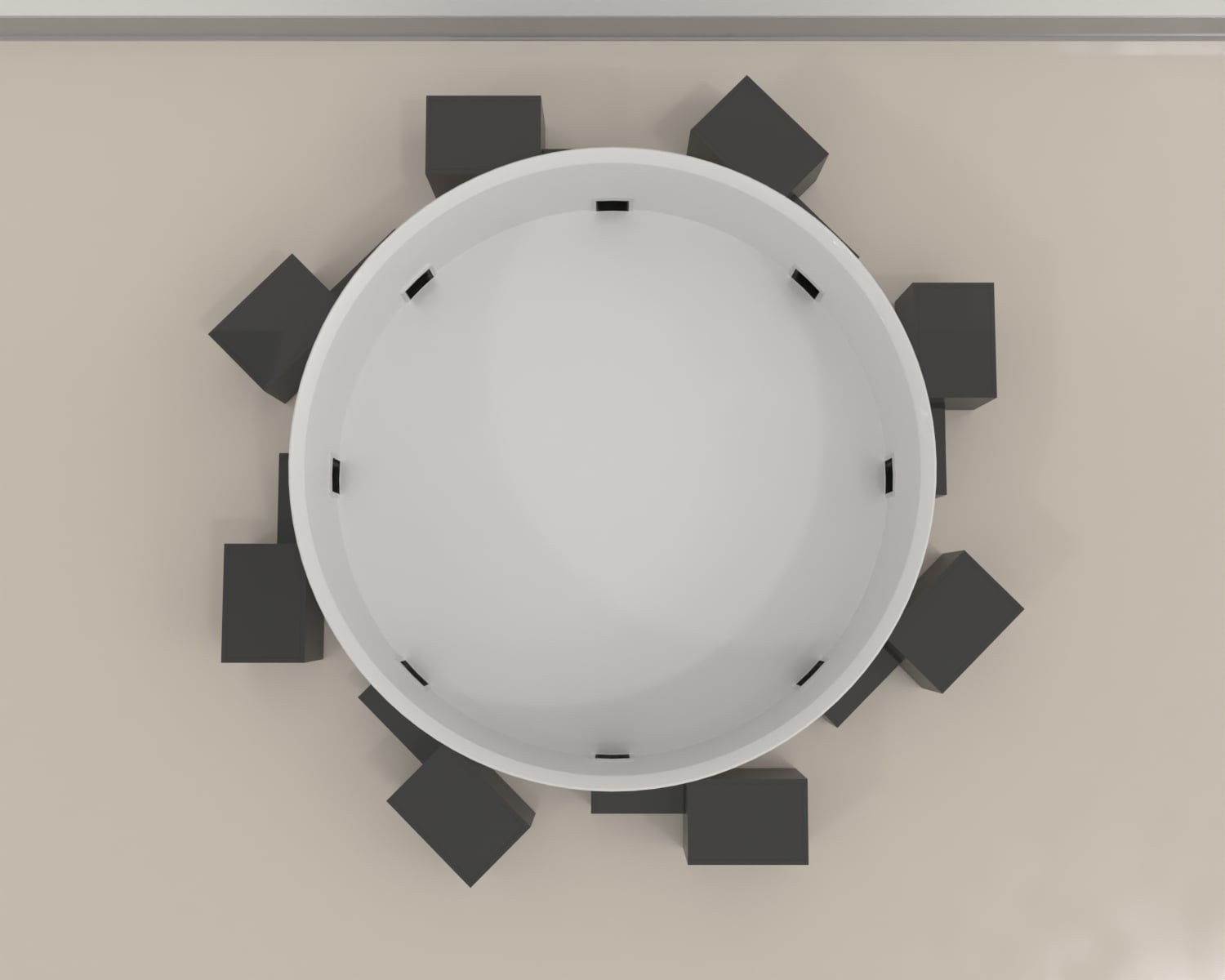
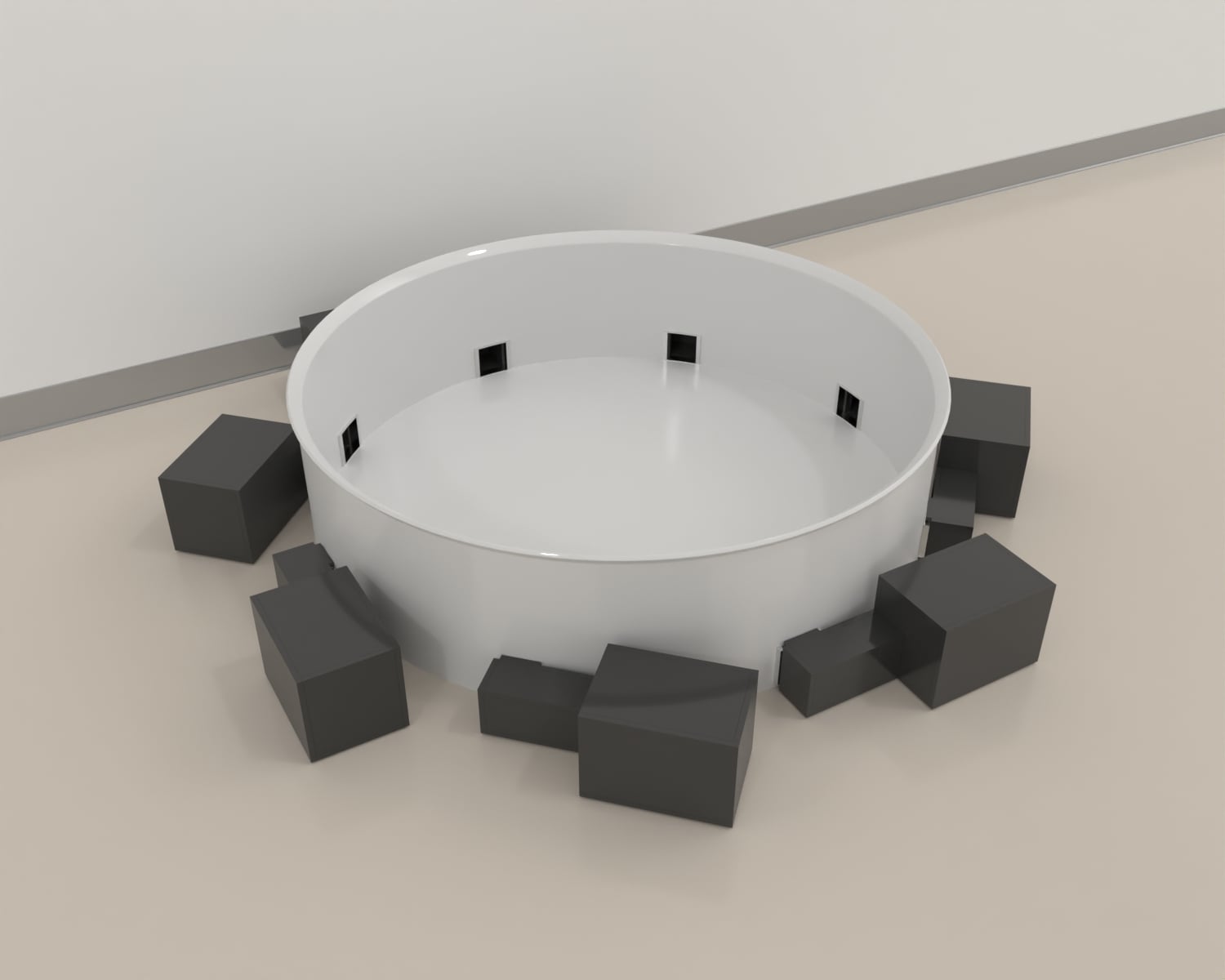
- 48 inch diameter x 12 inch height
- 8 exits, 3 L x 3 W inches each
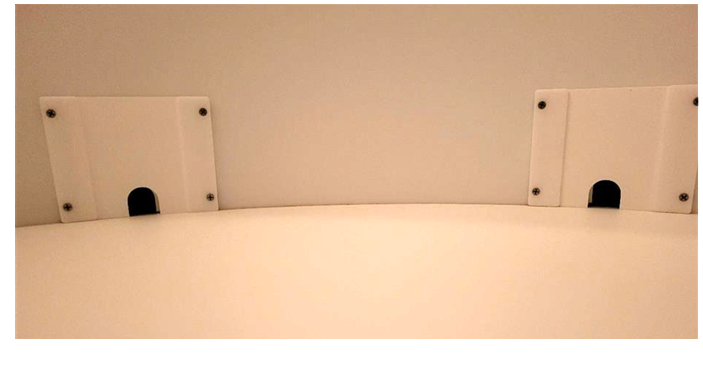
- Door sets with the following semicircular openings:
- 8 x 0.75 inch diameter
- 8 x 1 inch diameter
- 8 x 1.12 inch diameter
- 8 x escape boxes with corridors (8 L x 6 W x 8 H)
- Available in white, blue, grey, or black
Track rodents with ConductVision
ConductVision is our video-tracking software. Record your sessions on video, and it scores standard rodent tests, such as those listed below.
Examples of tests it scores
To check whether ConductVision scores your protocol in this apparatus, ask in your quote request.
Add ConductVision to your quote
A 5-year license is $3,990 in total.
Results export as CSV files.
Documentation
Apparatus & Equipment
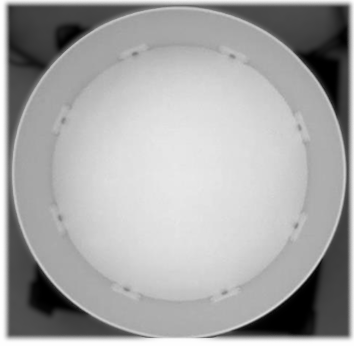
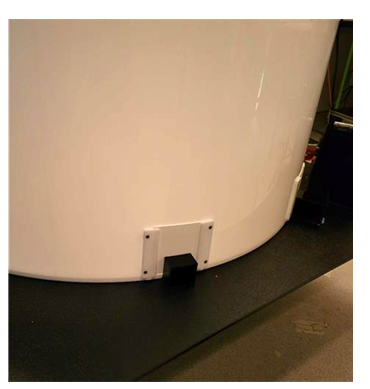
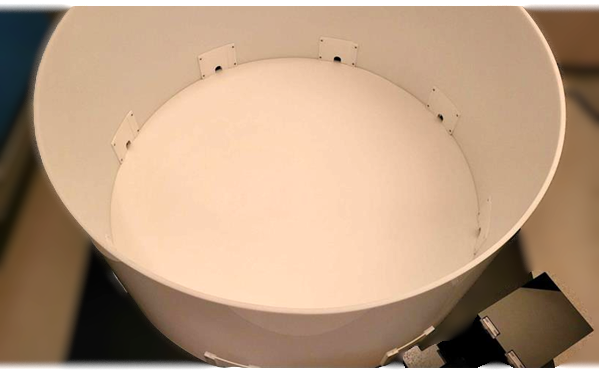
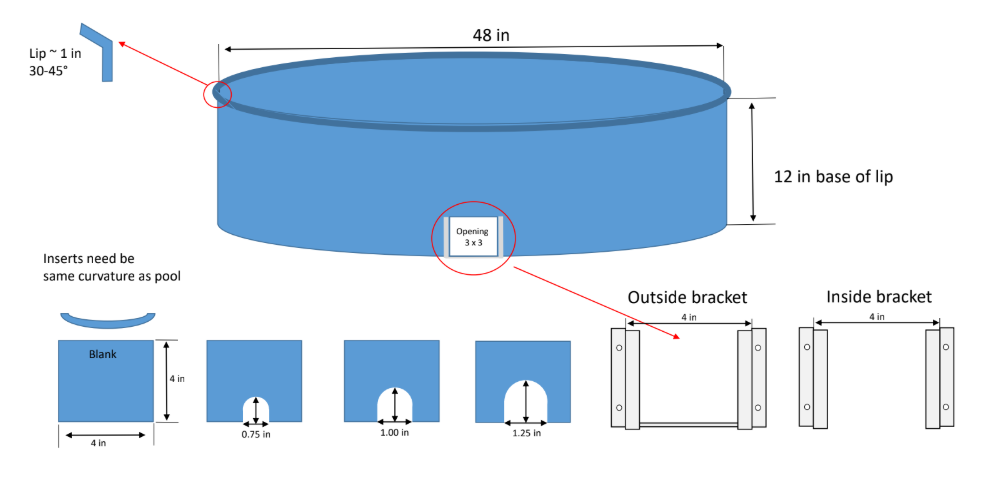
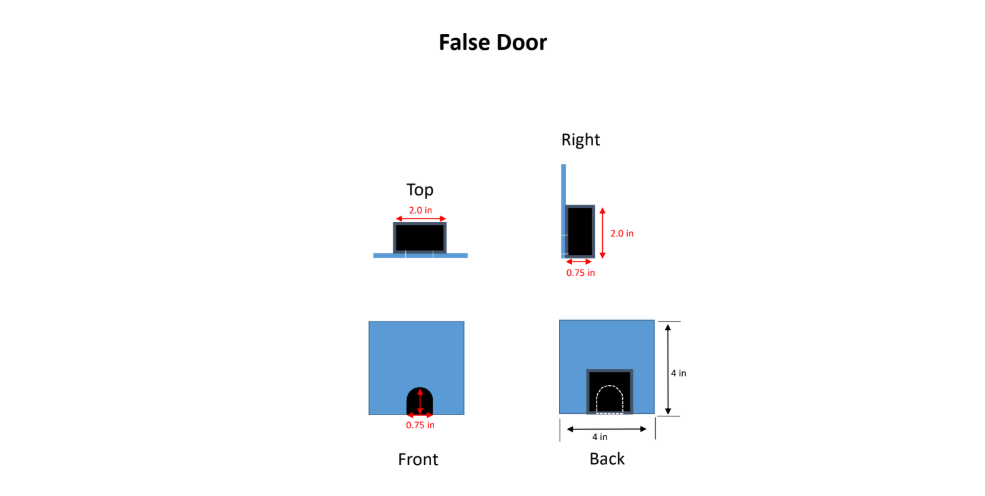
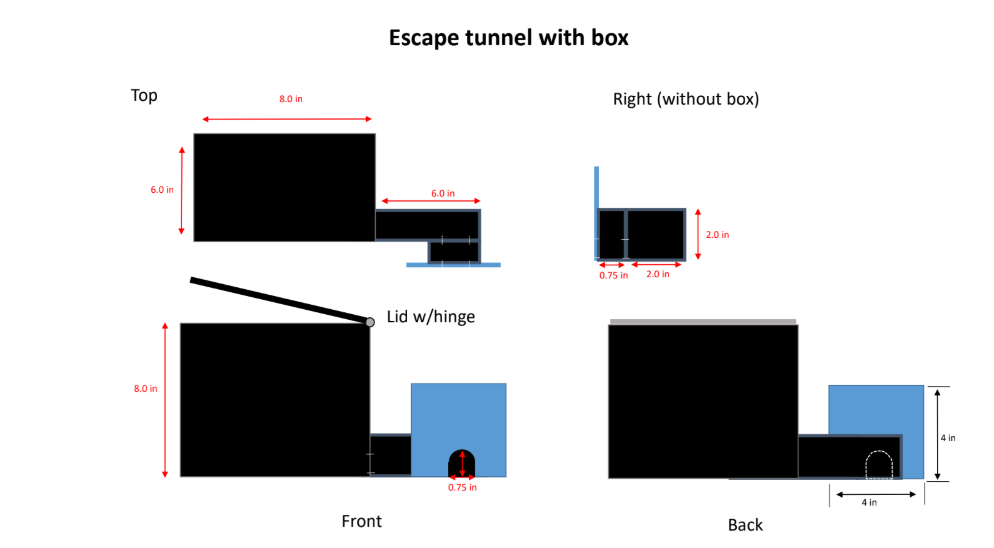
The Colosseum Maze is a circular maze measuring 48 inches in diameter and 12 inches in height. It is equipped with eight distinct exits, each measuring 3 inches long by 3 inches wide. The system includes three sets of interchangeable doors, allowing researchers to modulate task difficulty with semicircular openings of 0.75 inch, 1.0$ inch, or 1.12 inch diameters. Furthermore, the maze integrates eight individual black escape boxes, each connected via a corridor measuring 8 inches long, 6 inches wide, and 8 inches high. The entire apparatus is available in a choice of white, blue, grey, or black finishes.
Training Protocol
Data Analysis
The following parameters can be observed using the Colosseum maze:
- Latency to escape
- Distance travelled
- Velocity travelled
- Time/Distance in center
- Time/Distance in thigmotaxis
Literature Review
We salute you: A novel spatial learning and memory test for mice
Rationale and Apparatus Design
Mouse models (Mus musculus) are essential for neurological research, yet many traditional cognitive assays (e.g., the Morris Water Maze) were optimized for rats and rely on ethologically irrelevant or highly stressful conditions (e.g., swimming, food deprivation, aversive light/noise). The Colosseum Maze addresses this limitation by being specifically tailored to the innate shelter-seeking behavior of mice, utilizing a large, open space and ambient light as sufficient motivation without external aversive stimuli. This approach mitigates stress, promoting a more accurate assessment of intrinsic spatial learning and memory.
Validation in Wildtype Strains
Validation studies confirmed the apparatus's efficacy across common wildtype research strains (C57BL/6NTac (B6), B6 x C3H F1 hybrid, and 129SvEv).
- Locomotor Activity and Anxiety: Initial habituation to the open-field protocol showed significant differences in basal locomotor output (distance and velocity) between the three wildtype strains. However, all three strains demonstrated the ability to readily perform the Colosseum Maze task, indicating that differences in baseline exploratory behavior did not preclude successful task acquisition.
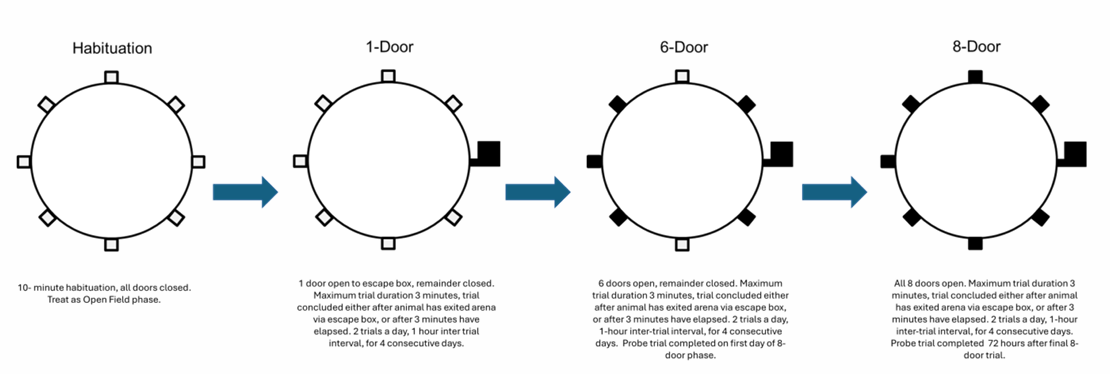
- Learning Acquisition: Across all training phases (1-door, 6-door, and 8-door configurations), escape latencies and distance traveled decreased significantly, confirming that wildtype animals successfully learned the spatial location of the escape box. The observed performance differences between strains suggest the task is sensitive enough to capture strain-dependent cognitive variability.
- Use of Distal Cues: To confirm that mice were navigating based on true spatial cognition rather than localized features, a 90-degree arena rotation validation was performed. The lack of a significant difference in escape latencies before and after the rotation validated the reliance on distal room cues for navigation, establishing the Colosseum Maze as a robust measure of allocentric spatial memory.
Applicability in Disease Modeling
The Colosseum Maze was further validated using the 5xFAD mouse model (Jax: MMRRC Strain #034848-JAX), an established model of Alzheimer's disease known to exhibit deficits in tasks like the MWM.
- Cognitive Deficit: Compared to wildtype littermates, 5xFAD animals displayed significantly greater escape latencies and greater distances traveled across all training phases, indicating a clear deficit in spatial learning acquisition.
- Motor Function: While 5xFAD animals had a significantly lower velocity of travel during the maze trials, they showed no difference in basal locomotor output or anxiety-like behavior compared to wildtype littermates during the initial Open Field habituation phase. This suggests that the observed deficit in the Colosseum Maze is primarily cognitive, consistent with findings in other spatial memory tasks.
Conclusion
The Colosseum Maze is a validated, ethologically relevant spatial learning and memory test for mice. It demonstrates high sensitivity by capturing both strain differences and cognitive deficits in the 5xFAD model, while minimizing stress artifacts inherent in traditional rat-centric assays. The task's ability to engage mice without severe aversive stimuli offers a significant methodological improvement for cognitive phenotyping in preclinical research.