
Mechanical Conflict Test
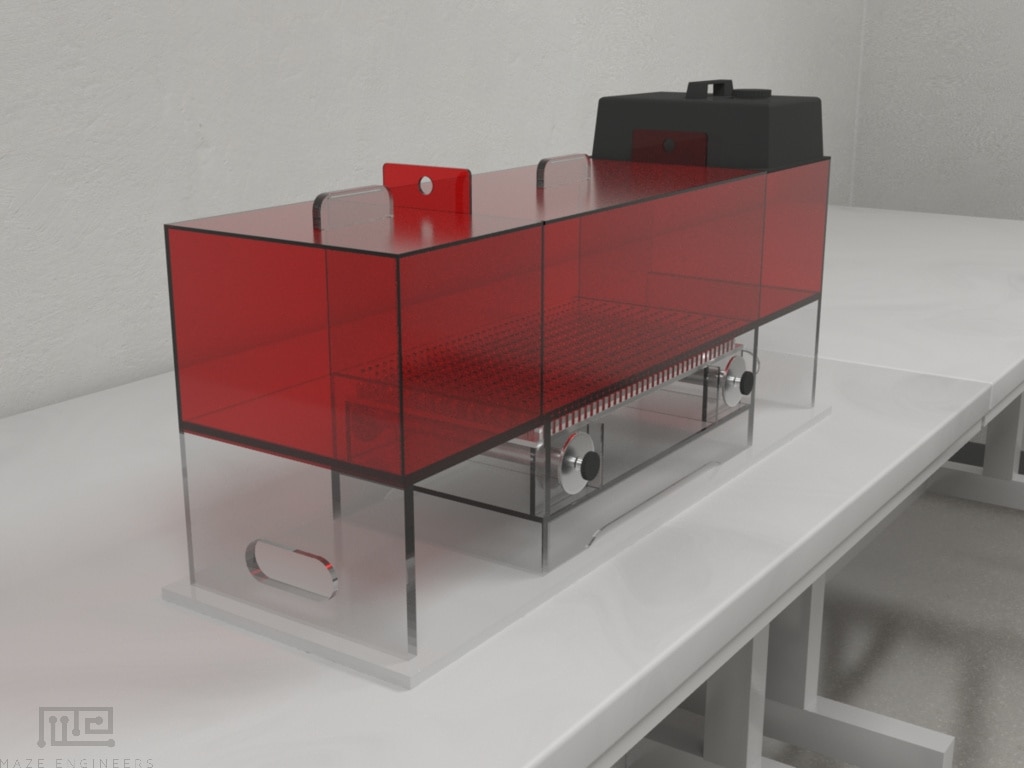
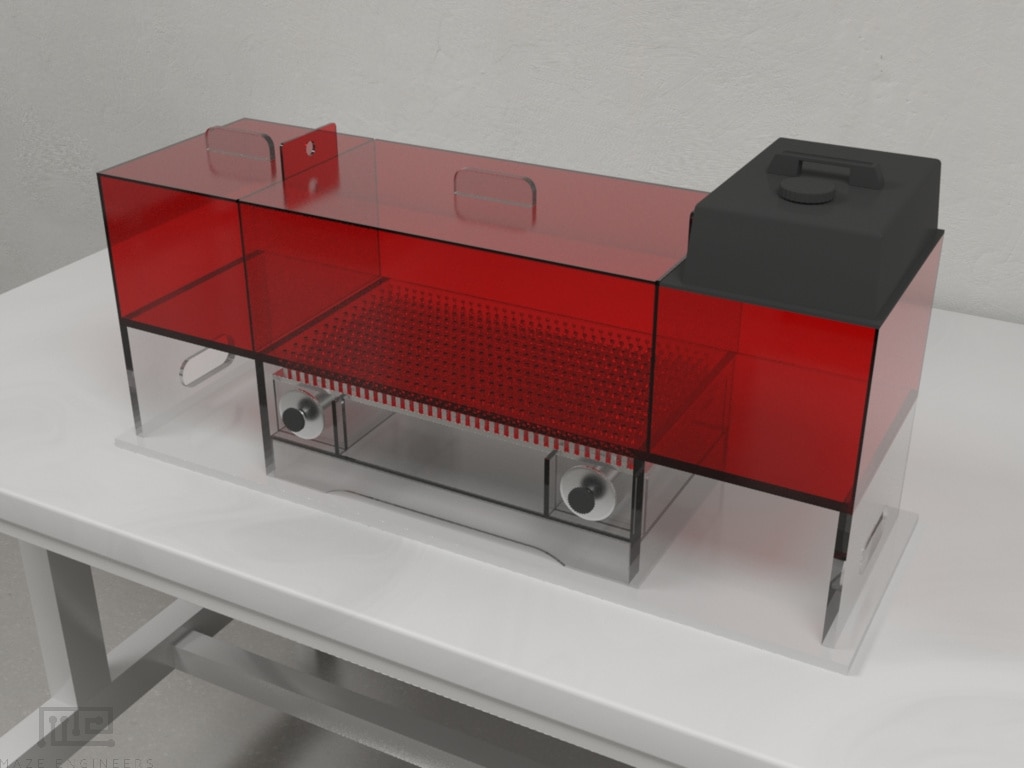
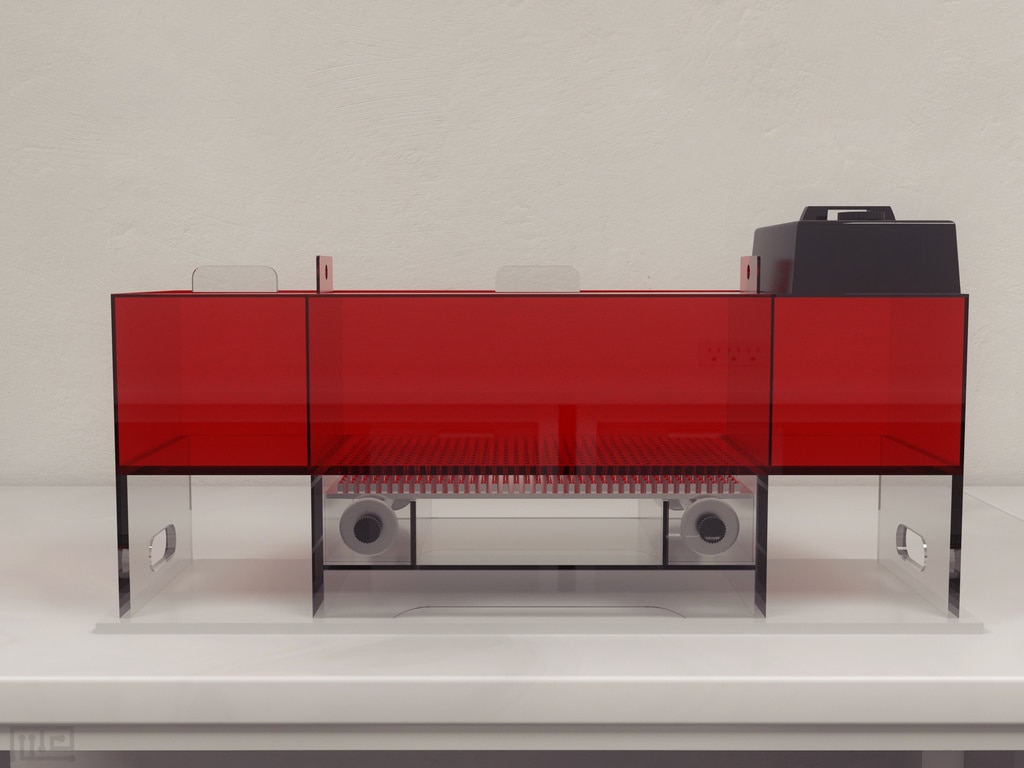
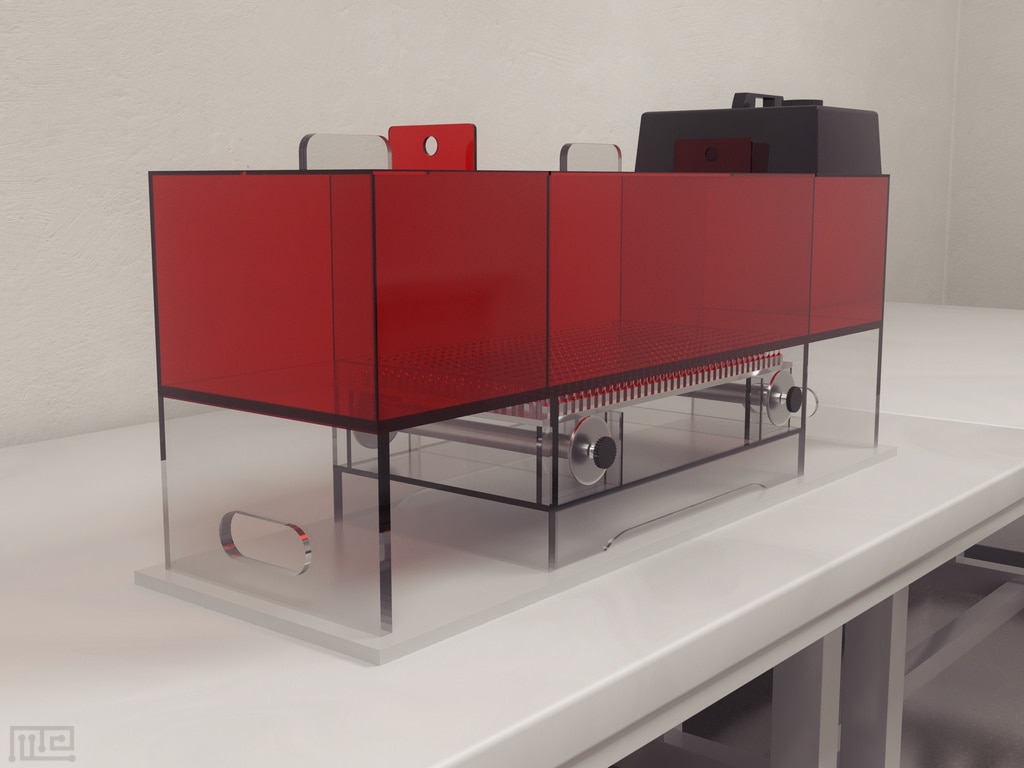
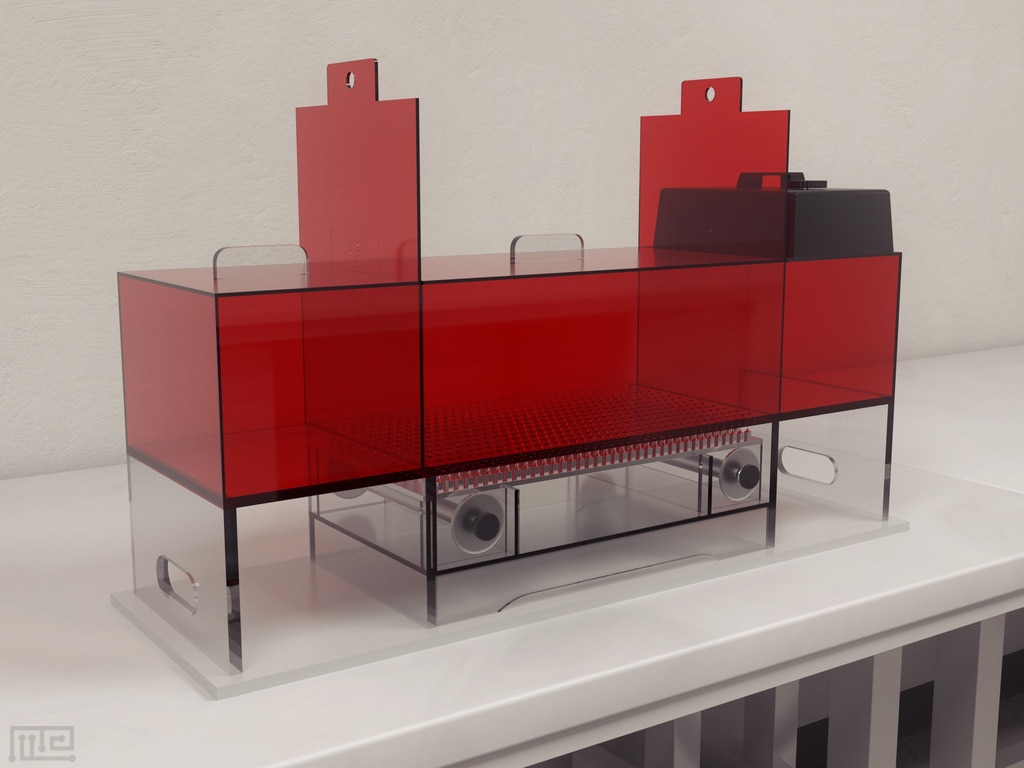
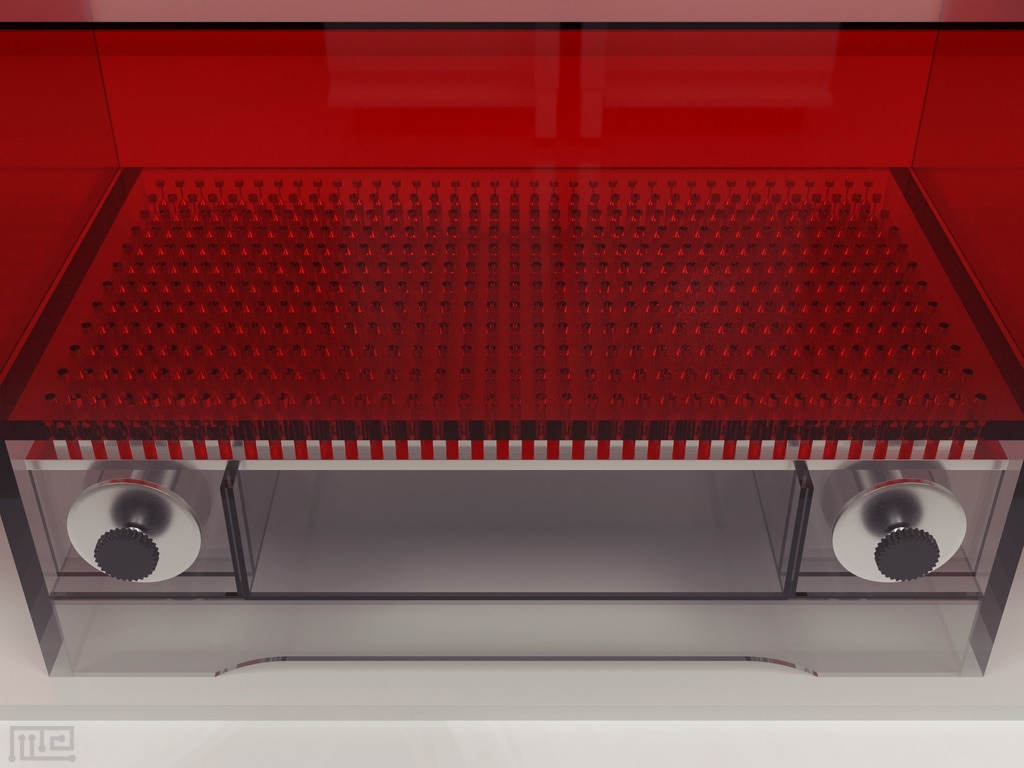
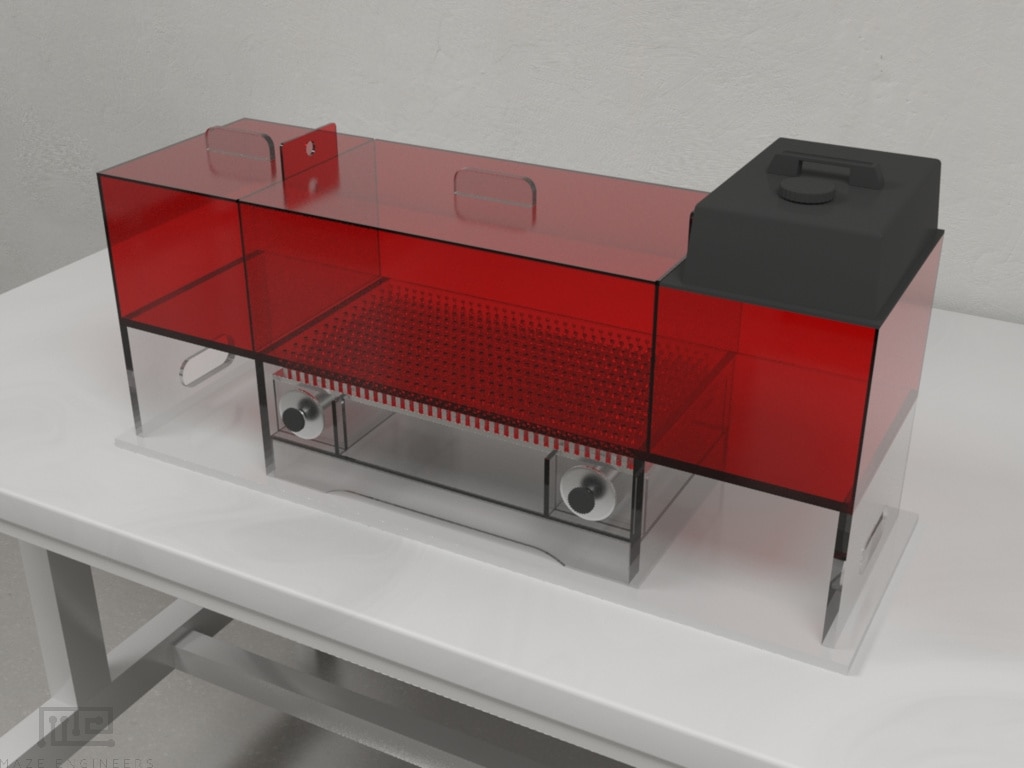
Description
The Mechanical Conflict Test (MCT) is a behavioral assay used primarily in rodents (rats and
mice) to assess pain-related decision making, nociception, and pain avoidance behavior,
especially in models of neuropathic pain.
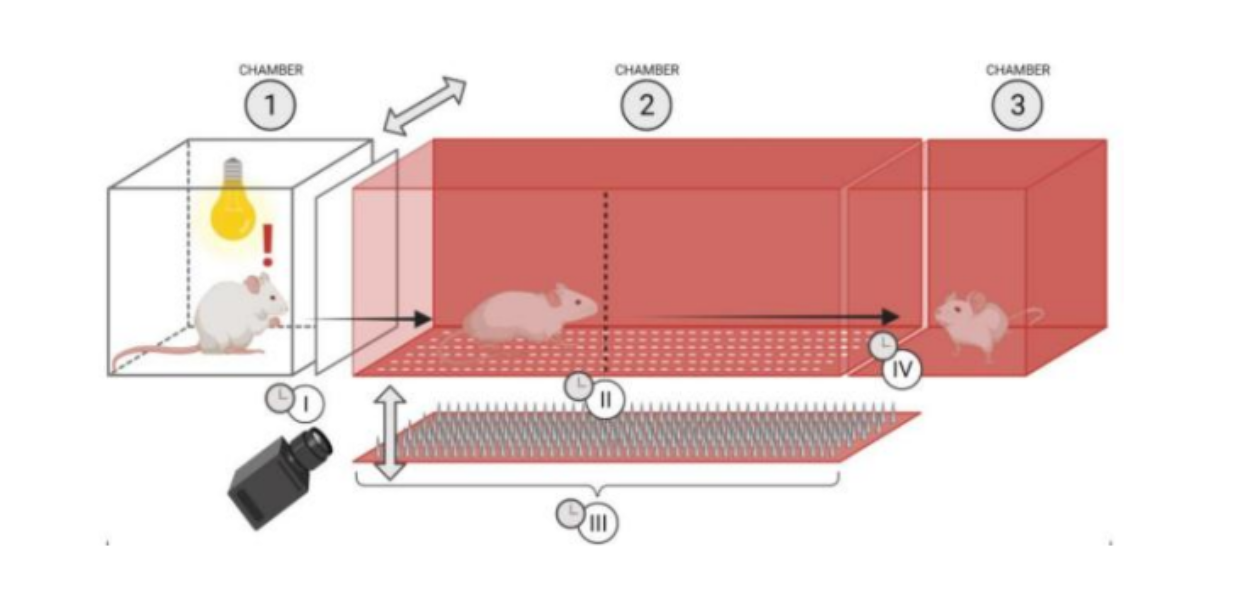
The animal faces a conflict between:
▪ Remaining in a brightly lit aversive chamber (rats naturally prefer dark environments).
▪ Crossing a floor containing sharp probes/pins to reach a preferred dark chamber.
Animals experiencing mechanical hypersensitivity or allodynia hesitate longer before crossing
and may choose less painful paths.
Track rodents with ConductVision
ConductVision is our video-tracking software. Record your sessions on video, and it scores standard rodent tests, such as those listed below.
Examples of tests it scores
To check whether ConductVision scores your protocol in this apparatus, ask in your quote request.
Add ConductVision to your quote
A 5-year license is $3,990 in total.
Results export as CSV files.
Features
- Specifications: ▪ Light chamber: 12 × 12 × 18 cm ▪ Dark chamber: 12 × 12 × 18 cm ▪ Runway width: 6 cm ▪ Probe section: 15 cm long ▪ Probe plate lane width: 6 cm ▪ Probe spacing: 3 mm center-to-center ▪ Probe diameter: 0.5 mm ▪ Interchangeable plates: 0, 1, 2, 3, 4, 5 mm protrusion
- Data: • Browse and Easily Print any result set. Export via Excel • Autocalculation of mean, std dev of rod duration, fall speed, distance. • Data Inputs: ▪ Escape Latency ▪ Crossing Time • Slower crossing may indicate discomfort or cautious stepping. • Less sensitive than escape latency. ▪ Crossing Success Rate ▪ Number of Refusals • Reflects conflict and pain avoidance behavior. • Time Spent Hesitating • Strong indicator of decision conflict.
- Precision Control
- Smart Fall
- Live Screen
- Data Control
- Probe Plate Design: Base plate (acrylic, aluminum, Delrin, or stainless steel) Array of stainless-steel pins/probes Mounting holes for quick replacement Flat underside for stable installation
- Automated Components: ▪ Automated light ▪ Sensor detection for chamber entrances and exits
Price & Dimensions
1 Lane Mouse
$4885